So, it's done. Last night the last movement of the Long Slow
Eucharist at Greenbelt was concluded. You may recall that I
advertised it
beforehand
a post or two back. I have a few reflections on the experience
and felt a, perhaps slightly meandering, blog post might be a helpful
thing -to me at least.
The idea was to have a communion service which took most of the
festival and wove together the wider festival and the act of worship.
There was a further aim to reference and use the
festival
theme "The Bright Field" taken from the
RH
Thomas poem of the same name. The outworking of this in the case
of the LSE was a focus on mindfulness as a way of learning to pay
attention to the created world with the hope that we could become
better able to notice and enjoy the epiphanies and the "ordinary
wonder". So the liturgy aimed to help form (or at least
introduce) participants in practices of giving attention as well as
of making strong connections between the wider festival and the acts
of gathered worship that formed the Long Slow Eucharist.
These aims showed themselves in the inclusion of various kinds of
mindful meditation practices into the liturgy. And these were done
both as individual exercises and also small group work (it is, after
all, a corporate thing -a liturgy). Many of these exercises also drew
connections to the wider activities of the festival by using it as
raw material for reflection and bringing insights and recollections
from it into the liturgy.
I should say that 'liturgy' I mean more than the words on the page
(which are reproduced below) and include guided reflection and
discussions and sharing in small groups. Also included are the
symbolic actions within the sessions.
In the primer session on the Friday night which was simply a talk
by me to give a bit of a prospectus about what would be happening.
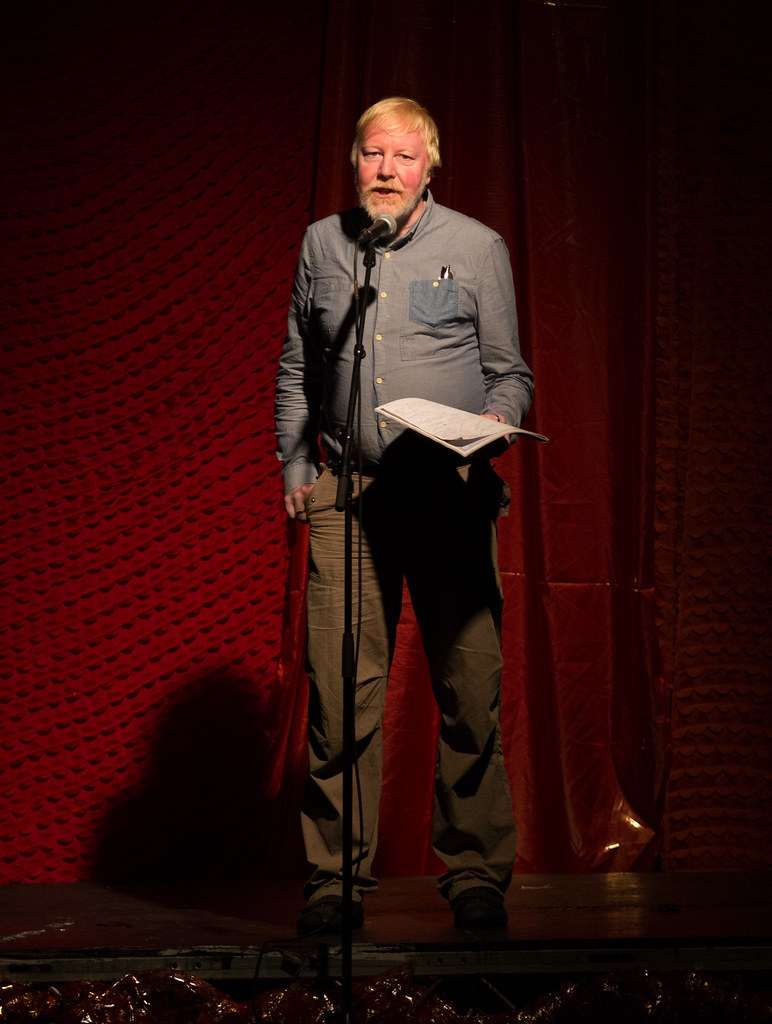
In
that I mentioned the aims as set out above and also that the aim was
to have an event covering the time of the whole festival. In a sense
to try to make visible the claim on the Greenbelt website that in a
way the whole festival could be regarded as worship by giving that
claim a concrete eucharistic form.
It's quite a big ask at a festival to get people to come back to
the next bit of the same liturgy rather than to come to one in a
series of essentially stand-alone events. Therefore, I did not expect
huge numbers: it's a significant commitment when there are so many
other things happening and there is an increased chance of having to
make (invidious) choices about what to attend when inviting things
are happening at the same time. So I was expecting we might only have
about 20 people. In fact we probably had about 50 at the primer
session on Friday night, 40 or so on Saturday and Sunday and 30 on
Monday -the rain may have deterred some, but then there were a
handful came who hadn't been before. I'm not sure whether the blurb
in the programme should perhaps have been clearer about the
continuity issue and I'm not sure how it would have felt to simply be
at the final session without having experienced the prior two.
Certainly some of those I spoke with at the end wanted to see it
happen again next year.
One of the ways to weave together the wider festival and the
gathering for LSE that I put in place was "Re.immersion cards"
these were given out between gathered sessions and had on them
suggestions for ways to engage the festival, I will include these at
the relevant points below.
One of the things I was quite pleased about which doesn't show up
in the way the liturgy is set out is the way of helping people to
form small groups for discussion. One of the participants made a
particular point of thanking me for this at the end of the Saturday
evening session. While thinking about this beforehand, I realised
that it was likely that there'd be a number of people who would have
come with one or more other people and a number who would essentially
have arrived in the session alone. Since I feel that the theology of
Eucharist gives a preference for a Communion to be a corporate event
rather than one where people essentially attend as individuals and
remain so, that there should be some way to encourage people to
interact together as part of the LSE. This meant trying to find a
relatively uncringeworthy way to get people to talk together. I
considered asking those who had come alone to identify themselves so
that they could be 'adopted' by others around them. But then it
seemed to me that this would potentially feel patronising or
stigmatising in the context of a culture where singleness is suspect.
So I opted rather to ask the accompanied to stand and then to look
around to befriend one of those still sitting and for them all to
introduce themselves to each other. This took place near the
beginning of the Saturday (that is the first 'proper' session).
In the main sessions, the non-congregational lines were mostly
spoken by one of two or three other voices apart from myself as
presider. This includes the lines in the thanksgiving. The role of
presider was enacted by leading the responses into the thanksgiving
and standing at table to handle the bread, wine, water and vessels as
well as the opening and closing prayers.
We had a slight logistical problem in having microphones tethered
by wires at one end of the tent. I very much felt that the communion
table should be in the dead centre of the space which meant that
there was a gap of 3 or 4 metres. So, if I wanted to speak something
while at the table, I couldn't; I had to either rely on the voice of
one of the helpers or tread back to a microphone. Mostly the way was
to use the voices of others while I performed the actions. This was
mostly okay or even good. At one or two points it was less smooth
than I would have liked.
Long Slow Eucharist Primer
Read out the
RSThomas poem at start of GB guide. Highlight the bit both sides
of the laid-out stanzas (not hurrying into the future or holding back
in the past), making connection to mindfulness, being aware of the
present moment.
Genesis of idea
The idea began in leading retreats and days of prayer involving spending time praying and
learning together, and then ending with HC. BUT then I thought, HC is meant to
be about praying and learning -not just a set-piece hour relatively
disconnected from the rest. And vice versa: life and activity is
meant to inform and be informed by our worship; centrally worship is HC.
AND
the GB website
claims that the whole festival is meant to be worship.
Rationale
To integrate the festival and acts of worship (liturgical events) and
help us to FEEL the connections more fully.
Slowing down -taking time to worship -so why not take a good long time ...
Mindful
in the sense of paying attention to the simple and commonplace as
potential epiphany. So the worship is to try to help connections and
epiphanies to occur.
Mindfulness (I lead sessions at
Northumbria University) is fundamentally about learning to direct
attention and be conscious of oneself in the present moment. -More
later.
The Liturgy
I intend 'liturgy' to mean the whatever we do together as God's
people before and with God to build up each other and to be equipped
for God's work in the wider world.
So: not wedded to particular
forms just because ...
Smearing the Communion service across the
days. This means messing with the order otherwise it might feel
backloaded (a discovery from early experiments)...
7-fold /4-fold
action (Doing in remembrance) Take bread, take wine, bless them,
break the bread; ... wine; eat bread; drink wine (> take; bless;
break; share)
the sessions pick up these but spread them across
the 3 sessions and interweave ministry of the word and prayers.
There
will be times of communal reflection as well as individual...
Slowth
(vs sloth or slowness)
Ctr hurry or hurriedness -supposed curse of
modern life and esp. of so-called time saving tech like transport and
ICTs. Leading to Slow mvt and "multitasking is a sin".
I disagree a bit: the problem is with our attitudes and taking
hold of them. Not the tech in itself. It is a convenient shared fiction that these things own us / control us. But it's actually our need to
learn to use or not use them wisely. To make them servants of human
welfare not tyrants of dis-ease.
Our experience of Time: memory
and attention. Age and busyness. Slowth is about deciding for slow
when it is appropriate for the sake of our mental and emotional (and
physical) health.
To be mindful is not emptying mind but filling
it with single attention on just one thing in order to be in the
present moment.
Breath, a sight, an awareness of God .....
Also
about self awareness especially with attitude of being compassionate
to ourselves: slow to 'anger' about our reactions, slow to judge,
curious about what we find.
Exercise: Basic breath awareness
exercise.
Immersion
exercises for Friday to Saturday
Take
a few minutes to be still amongst noise, activity and/or hurry. Just
be physically still without interacting with those around and simply
observe the sounds, smells, sights and feel of the moments as they
pass. Sense yourself as a quiet centre amidst it all. And enjoy …
Perhaps set an alarm to call you to
stillness.
Long Slow Eucharist, Introit
Saturday 6pm
In the worship text,
bold parts are to be said all together,
italicised parts are headings or information, ordinary type is
normally said by a single voice.
Surfacing
A Light
in the name of God; author of all being, who lights the bright field
of our world with Life
A light in the name of God the eternally
begotten, who invests the bright field of our world with grace
A
light in the name of God the Go-Between who energises all with
God-ward-ness
Three lights in honour of God
in whose
three-fold friendship we now gather.
Three lights attracting
festal fragments
So may we gather them and full-feel them
To
know them with brightening hearts.
Introductory comments.
(in this case mainly offering some words of welcome and to reaffirm
that this was the first of three gatherings. The main theme would be
'taking' more about which would be said later in the
session)
Blessed and hallowed be your name, O God; Giver
of good gifts;
you have guided and sustained us and brought us to
this space and drawn us to this occasion.
We are gathered here
to encourage one another to grow more fully into the loving purposes
of God.
We are gathered here to grow in our appreciation of God
and God’s ways.
We are gathered here to be nourished with the
acknowledged presence of God.
Taking in the Festival:
orientation, groupwork and ownwork. The 'taking' of bread and wine to
be complemented by taking our own experiences and bringing them to
table. The groupwork
Petitionary prayer, Closing with
Our
Father ...
Reading
1Chronicles 29: 10-12
So
David blessed the LORD in the sight of all the assembly; and David
said, "Blessed are You, O LORD God of Israel our father, forever
and ever. "Yours, O LORD, is the greatness and the power and the
glory and the victory and the majesty, indeed everything that is in
the heavens and the earth; Yours is the dominion, O LORD, and You
exalt Yourself as head over all. "Both riches and honour come
from You, and You rule over all, and in Your hand is power and might;
and it lies in Your hand to make great and to strengthen
everyone.
Reflection on 'Taking' and Taking and tasting
exercise
Taking bread and wine for hallowed use
With
this bread that we bring
We will remember Jesus
With
this wine that we bring
We will remember Jesus
Bread for
Christ's body, wine for Christ's blood
God's gifts, and
ourselves to this table we bring. *
Re.immersing...
Blessed are you God; you gave us to each other for a time and now
you call us to join you in the wider relationships and activities of
this bright field. People called by God, when you leave this venue
...
go knowing you are loved
go secure in God’s sustenance
go
revelling in God’s continuing presence.
Saturday's Re-immersion in
festival (Saturday to Sunday)
Try to 'collect' at least five
experiences of 'ordinary wonder' -where you have a sense of the
beauty, is-ness or glory of something ordinary in the festival that
you encounter. Give yourself permission to notice them consciously
and tarry a while to appreciate them.
*Prayer based heavily on Church of England, Common Worship
prayer of preparation © Archbishops' Council: under license for use.
Long Slow Eucharist, gradual
Sunday 6pm
"Gradual" is a word meaning a journey from one point
to another. Often, usually, in liturgy it refers to the music and
process of taking the gospel book to the point where it will be read.
In this case the term is used because this is the middle gathering of
three and helps move us from the taking phase of the LSE to the
final.
Resurfacing
A light in the name of the
Father of lights
A light in the presence of the Light of the
world
A light in upholding of the bright inspiring Muse.
Three
lights drawing in festal fragments
So may we gather them and
full-feel them
To know them and God with brightening
hearts.
Introductory comments. The main focus at this
session is 'blessing' or 'thanksgiving' (brief explanation about
Jewish blessings, hallowing by thanking etc)
Blessed are
you, God; giver of good gifts; we are thankful for companions and
conversation, time and place, and leisure to bring them together. As
we are gathered:
May we encourage one another
As we
converse:
May we grow more fully into your loving purposes.
As
we share:
May we be nourished with your presence O
God.
Exercises: “Take of your shoes...” -literally
(just one if two is a faff because you are wearing boots, for
instance. Or even do the exercise with your hands). Just feel the
grass beneath your feet for a minute or two. Try to fill your
attention with the feel of grass beneath your feet. Then, with or
without footwear, walk slowly around for a bit, noticing and filling
attention with the the sensations of walking,
moving.
Reading
1Timothy 4:3ff
They forbid
marriage and demand abstinence from foods, which God created to be
received with thanksgiving by those who believe and know the truth.
For everything created by God is good, and nothing is to be rejected,
provided it is received with thanksgiving; for it is sanctified by
God’s word and by prayer. If you put these instructions before the
brothers and sisters, you will be a good servant of Christ Jesus,
nourished on the words of the faith and of the sound teaching that
you have followed
-Reflections: rationale, communal
exercise in 'counting our blessings'. Essentially this involves
sharing in groups one each of the things discovered in the prior
re.immersion exercise. We write them down (on the exercise cards and
bring them to table.
Thanksgiving...
God be with you
And also
with you
Let's lift up our hearts
We lift them to our
God
Let us give thanks to the Lord our God
it is right
to give thanks and praise
Blessed are you God: for every
good and perfect gift comes from Above; [the cards with the
blessings written on are poured/dropped on the bread and wine on the
table] …
Thank you for blessing us by your presence and
bringing us joy.
You reach out to commune with us through every
particle of creation.
We laud you for Jesus who shared our
condition, suffered our abuse, and entered our death.
dying and
living, he declared your love, gave us grace and opened the gate of
glory
We praise you for Jesus' sharing of our Earthliness
& connecting with our brokenness.
In Christ we know
ourselves beloved of you, that we are truly children of God.
Blessed
are you God; your generosity brings us this bread & wine; earth-&
rain- & sunlight-born, products of human care and delight. In our
sharing of them now, renew us and mend us.
Father as we do
this, may we re-present Christ in the world
Re.immersing...
God,
you draw us into the field of your nurturing presence, you give us to
each other and to the world that we may create together care and
flourishing, life and delight. May we show forth your image as we
seek your love-bright purposes in the wider field of this
festival.
Amen.
Re-immersion
in festival (Sunday to Monday)
Try to notice three things that remind
you of the brokenness of the world. Spend a little while tracing in
your mind the connections between this festival and the wider world
through these things.
Long Slow Eucharist, consume/ation
Monday 6pm
Resurfacing
Source of all life, as a child to her
mother:
We turn to you
Saviour of all life, as a flower
towards the sun:
We turn to you.
Sustainer of all life,
as music to silence:
We turn to you.
Explanatory
comments. -Focus this time on breaking and sharing. 'Breaking' is
also taking in the breaking of the world as well as the breaking of
ourselves as we connect with the broken things and places of the
world and in our own lives.
Blessed are you, God; giver of
good gifts; we are thankful for companions and conversation, time and
space, and leisure to weave them all together.
As
we are gathered:
May we encourage one another
As we
converse:
May we grow more fully into your loving purposes. O
God.
As we share:
May we be nourished with your
presence.
Breaking open of wordly sorrows: exercise. By 'worldly' is
meant not 'sinful' necessarily but rather 'belonging to this earthly
vale of tears'. The exercise is to share in small conversation groups
something that we lament over, perhaps it is something we've heard
about in the festival, perhaps it is something from the wider world.
In token of this we fill a flask each with a few drops of water to
symbolise the tears shed (recalling the Psalm that pictures God
saving all our tears in a jar). This flask of water is brought to
table ready to be added to the wine later.
Call to
confess our sins … (framed as how we have prepetrated or
perpetuated brokenness in the world)
We acknowledge that we
have played our part in the breaking of the world.
And that we
have allowed ourselves to despair
(a moment of silence)
We
refuse the risks of faith, preferring the safety of our sorrow or
cynicism
we are afraid of being broken.
(a moment of
silence)
Loving God, father and mother to us, speak hope into
the bleak fields of our life
Speak comfort into the sorrow of our
hearts
Speak love into the brokenness of despair.
forgive us
and make us whole
words of forgiveness are spoken leading
into...
Let us choose faith even where we find it hard to see
God or to hear God’s voice and our minds are awash with
questions
We turn to God and choose to persevere
Let us
choose hope in this world created in goodness, but where goodness is
run through with pain, crushed, and death is always present
We
turn to God and choose trust
Let us choose love even where
love hurts and selfishness, greed and apathy seem mightier
We
turn to God and choose life
God in Christ asks us whether we
would continue in the way of Spirit and truth:
Lord to whom
shall we go
you have the words of eternal life.
We believe and
know that you are the Holy One of God
Preparing
ourselves, and the bread and wine
We are the Body of
Christ
God's Spirit is with us
We have blessed God:
We
have given God thanks and praise
By your Spirit brood over
us and over these gifts of your creation: as we eat and drink unite
us in the body of Christ.
As bread and wine are made one with
us, may we become one with you; living our prayer and praying our
life. *
Proclaiming and celebrating Christ's death
and rising in glory, let us find in this bread and this wine an
assurance that we are indeed your beloved children.
As we eat
and drink now, make us one in Christ, once dead and now
alive.
Around this table we come with creation groaning in
childbirth anticipating its liberation from decay. We offer our
sacrifice of praise and join with the eternal song of heaven.
Holy,
holy, holy, Lord God Almighty, Heaven and earth are full of your
glory,
hosanna in the highest.
Breaking of bread
We break this bread |
the bread is broken and placed on
tables| to share in the body of Christ.
Though we are many
we are one body because we all share in the one bread. **
Lamb
of God,
you take away the sin of the world; have mercy on us.
(x3)
We pour this wine |
the wine is poured from bottle into
glasses| to share in the blood of Christ.
Though we are
broken we are healed and forgiven because we all share the wine of
the new creation.
The tears of affliction |
the water in the flask is added to the
wine| we bring for hope:
Tears may stay the night but joy
comes in the Morning.
sharing of communion;
the
hallowed bread and wine are shared with these or similar words:
The
body of Christ broken for you
The blood of Christ for your
forgiveness
Gospel reading John 21:15-17
Hear the
words of the gospel of our Lord Jesus Christ, according to John
Glory
to you O Lord.
When they had finished breakfast, Jesus
said to Simon Peter, ‘Simon son of John, do you love me more than
these?’ He said to him, ‘Yes, Lord; you know that I love you.’
Jesus said to him, ‘Feed my lambs.’ A second time he said to him,
‘Simon son of John, do you love me?’ He said to him, ‘Yes,
Lord; you know that I love you.’ Jesus said to him, ‘Tend my
sheep.’ He said to him the third time, ‘Simon son of John, do you
love me?’ Peter felt hurt because he said to him the third time,
‘Do you love me?’ And he said to him, ‘Lord, you know
everything; you know that I love you.’ Jesus said to him, ‘Feed
my sheep.
This is the gospel of the Lord
Praise to you O
Christ.
reflection: drawing a parallel between Peter's
being commissioned and ours as we go into the rest of our lives,
having been fed by Jesus, the Bread of Life.
Ending
Blessed
are you God; you lent us to each other for a time and we give thanks
for what we have learnt and the support we have known.
Whatever we
have heard that is Good
Let us remember and take to
heart.
Whatever we have found challenging
Let us recognise the
benefit and find wisdom to carry out.
If we have offended in some
way
Let us come to know it gently and make amends wisely
As
people loved by God and called into the wider world:
We go to seek
God in all
And find God in each
To discover God at
work
in creation and human culture
To discern God’s
blessing
And to be God’s blessing to others
Sharing
signs of peace as we leave
Re-immersion
in wider life
Choose one of the things that you feel
God might have been drawing your attention to during the Festival.
Draw up at least one thing you could embed in your life as a response
to that thing.
*This phrase from Iona Commmunity Communion
**Prayer
from Church of England, Common Worship prayer of preparation ©
Archbishops' Council: under license conditions for use.


