Showing posts with label science. Show all posts

05 July 2026

The Science And Spirituality Of Addiction

 What drew me in was the collocation of science and spirituality in the title. I'm also a little interested in addiction through having played a small part in the pastoral support of people with addiction and not feeling that I had much of a handle on it to be of much help.

What I appreciate about this book is the breadth of interest and the humane approach of the author. I suspect I'm going to be re-reading the introduction to the neuroscience relating to addiction which was helpful and put into perspective things that I (like many others) had been somewhat aware of without knowing the context or further details. 

I also appreciated the cross-referencing from time to time with scriptural illustrations. This becomes more prominent when discussing matters to do with wealth where the dialogue between science and scripture becomes a bit more concentrated.

And that drawing in of wealth to consideration was also one of the things that drew me to read the book, and I wasn't disappointed. There is a chapter explicitly on the topic and then the discussion of it is followed up in subsequent pages. I think that this is a helpful thing when it comes to thinking about the current world situation where we have more wealth concentrating with fewer individuals and companies. Understanding the neuropsychology of individuals is a really helpful thing to consider.

What I also appreciated was the humane approach of the author and particularly the reprised invitation to self reflection on the main points raised in each chapter. I think the author does us, the readers, a favour with the quality of the self-reflection he offers through these pages. And it is helpful self reflection: it models what he invites us to do at the end of each chapter and it helps to bring together the objective accounts offered by the biology and chemistry he leads us through with a careful (mindful, I think would be fair) attention to inner subjective correlates of that bio-chemistry. I also appreciated this account because by it we are shown how individuals' biology and personal histories can mean that neurochemical effects can vary -there is no 'one size fits all' when it comes to drug effects.

Some of what the exploration makes clear too is the social components of addiction: from the way that drug use can be a kind of attempt to repair social deficits as experienced by individuals to the way that treatment if pursued humanely can be successful if it can help repair connection and social wellbeing for those who get drawn into addiction.

I would say, based on my reading of this book so far, that it gives a really helpful resource to anyone who is seeking to support people in addiction and to understand our own addictive responses where they exist. I think that there are parts of this book that I will be returning to in future to help deepen and consolidate understanding that may help in pastoral support.

The blurb that drew me said the following, and I have found the book does live up to this.

Perfect for readers who:

  • Recognize themselves in the compulsive scrolling, the overworking, the numbing — and want to understand why

  • Are drawn to Gabor Maté, Bessel van der Kolk, or Johann Hari's work on addiction as disconnection

  • Want neuroscience and Christian theology in genuine, non-forced dialogue

  • Find Ken Wilber, Spiral Dynamics, and integral approaches compelling

  • Work in counseling, recovery coaching, chaplaincy, or pastoral care

  • Are curious why Jesus had so much to say about money, power, and the dangers of wealth

  • Believe that healing the self and healing the world are inseparable projects

In disclosure, I received an e-copy of this book for review purposes. I was asked to offer an honest review within a month but there was no pressure or suggestion that I should be favourable (or otherwise!). The opinions above are my own straightforward first responses to the book.

#TheScienceAndSpiritualityOfAddiction

24 June 2023

Why we hate -a book review

The topic of this book is important as we are seeing a rise in all sorts of hatred across many societies. Social media seems not to helping -rather the reverse: fanning the flames. Our global community is increasingly being stressed by climate forcing -related changes which are beginning to push populations into harm's way in terms of forcing people to confront others who are being demonised. And our propensity to emote synergistically with those around us has always been a force for fanning the flames of conflict as we can be induced to hate someone designated 'enemy'. 

I came to this book also with my own questions about how anger and hate interrelate and how our psychology around hate can be manipulated and how that manipulation can be counteracted. 

I thought I'd give this book a try also because I recently became intrigued by this:

Hilge Landweer distinguishes between Verachtung (contempt) and Hass (hate). She argues that contempt fits perfectly into the neoliberal emotional landscape, because it’s a gesture of turning away from, and dehumanising the other person, not taking them seriously. Hate, on the other hand, takes its object very seriously. In a system of class hierarchies, there’s contempt from above and hatred from below. The ruling class don’t have to take the enemy seriously most of the time – unless the working class organises and strikes. But when you’re an oppressed person, you really have to take your oppression seriously, because otherwise you can’t exist. You can’t survive... " https://novaramedia.com/2023/04/17/is-hate-politically-useful/ ...

This was intriguing not least because it recognises the place of power in our emotional responding. And I recognised something in this about where anger and hate might be legitimate and about that adage "love the sinner, hate the sin" -is that sound advice? Or is there more complexity involved? And, as a Christian, is some of Landweer's analysis anywhere near what we might want to bring to reflection on Ephesians 6:1-10?

The book spends a lot of time initially on history and evolutionary  background to violence and discrimination. At this level, it didn't meet with my desire to examine hate as emotion firstly rather than as social attitudes relating to othering. Of course, this does lead me to consider the the relationship between othering, in-group and out-group attitudes on the one hand and detestation or contempt in individual psyches -and indeed the genesis of such hatred as well as the social construction or structuring of such emotions.

One of the things I appreciated was the outlining of good reasons to consider that homo sapiens are fundamentally a co-operative species (which scriptural-theologically I would locate in the narratives of Genesis 1 and 2) though that sociability is capable of being co-opted to ill. And the examination of the move from hunter-gatherer to settled agricultural societies with cities helps to justify both dimensions of that thesis.

I felt that the examination of wars and of just war theories was helpful and nuanced. It was also enjoyable that there is a British centre of gravity in the writing, in an era when so much takes a perspective of the other side of the Atlantic.

So, while this was not what I was expecting, it did throw light helpfully on the psychology and anthropology of war and prejudice. I guess the core thesis is that there are traceable factors that become culturally embedded but as it is 'merely' culture and not hardwired biology that does these things (though biology does play a part but not determinedly) , then we can design cultural ways out and around and beyond these hatreds.

I warmed to the authors deft handling and compassionate and fair-minded approach. 

Links

Why We Hate on Bookshop
Michael Ruse’s Website

 #WhyWeHate

24 June 2018

Light of the World | some more words


I few years ago I wrote some words.  Now I have some further words to the same tune and using some of the same lines.


Light  of  the  world,  of  glory  born,
Focusing  radiance  in  earthlife
pinpoint  Divinity's  form,

Light  of  the  world  in  darkness  shine,
Word  of  God  fleshed  out  in  spacetime,  
love  of  God  tested  in  pain.

For  it's  the  Mystery  of  the  universe
The  Uncreated  makes  a  home  in  created  time  and  space
Saviour,  shine  your  life  in  us
enliven  us  in  bearing  light,  as  wells  of  grace.

Andii  Bowsher  cc2014   8.8.7.8.8.7   10.12.7.12  (cf  Matt  Redman,  O  Sacred  King)


For comparison here's the 'original from 2000, posted in 2004.


Light of the World 
of glory poured 
Word of God fleshed out in spacetime 
Love of God tested in pain 

O gladdening light 
enlightening all 
we embrace love you've made human 
light of truth that sets us free 

For it's the mystery of the universe 
the uncreated makes a home 
in created time and space. 
And now you share your self with us 
pouring Godlife into death 
breaking open life in us. 

Jesus, Splice eternity in us 
encode in us your Godwardness 
and centre us. 


Putting them together, I would recommend.


Light of the World of glory poured Word of God fleshed out in spacetime Love of God tested in pain  

O gladdening light enlightening all we embrace love you've made human light of truth that sets us free 
 
For it's the mystery of the universe the uncreated makes a home in created time and space. And now you share your self with us pouring Godlife into death breaking open life in us.  

Light of the worldof glory bornFocusing radiance in earthlifepinpoint Divinity's form, 

Light of the worldin darkness shine,Word of God fleshed out in spacetimeLove of God tested in pain. 

For it's the mystery of the universe the uncreated makes a home in created time and space. And now you share your self with us pouring Godlife into death breaking open life in us. 

Jesus, Splice eternity in us encode in us your Godwardness and centre us.


Light  of  the  world,  of  glory  born,
Focusing  radiance  in  earthlife
pinpoint  Divinity's  form, 

Light  of  the  world  in  darkness  shine,
Word  of  God  fleshed  out  in  spacetime,  
love  of  God  tested  in  pain. 

For  it's  the  Mystery  of  the  universe
The  Uncreated  makes  a  home  in  created  time  and  space
Saviour,  shine  your  life  in  us
enliven  us  in  bearing  light,  as  wells  of  grace.

Andii  Bowsher  cc2014


8.8.7.8.8.7   10.12.7.12  
(cf  Matt  Redman,  O  Sacred  King)


03 March 2015

Desire Found Me ... or did it?

I've been reading* Andre Rabe's book Desire Found Me. It aims first to introduce us to mimetic theory (hence one strand of my interest in it) as propounded by Rene Girard. 'Desire' in the title is mimetic desire, but desire more generally has to be considered and I think it is right to see desire as a central characteristic of what forms us as human beings.
Having helped us to understand mimesis, Andre Rabe takes us into how this plays out into our spirituality. What I like about this book is that there are relatively simple explanations of mimesis -both the bare psychology (mirror neurons and all that) and the more developed 'psychoprehistory' which he calls anthropology.
Now, I have to confess, that I am well up for the first dimension of mimesis: I am all but convinced that the scientific evidence points that way. I think I've mentioned so before on this blog. And I agree that this basic human psychological trait is what enables 'principalities and powers' to grow out of human interactions. Rabe, rightly in my view, uses this to help us think about evil and the nature of original sin. I think that his exposition of this dimension of mimesis is well done and reasonably clear. Rabe's explanations are, I judge, helpful -though I wouldn't want to put them before someone without university level ability to understand stuff.
Where I'm a bit more skeptical is the second dimension of mimesis. It seems to me that the hypothesis of an ever-tightening spiral of mimetic desire leading to a primal scapegoat murder which becomes reframed as 'sacrifice', is hard to prove or falsify. And to me, it just doesn't quite gel: I find myself unconvinced and unable to quite make the connections stick to contemporary cultural phenomena. But that's not Rabe's fault, he's re-telling Girard's theory. As it happens, I don't think that my skepticism regarding this second dimension of mimetic theory actually impinge on many of the most telling or interesting ideas made in the book.
I enjoyed the reflections on atonement which, again, I think are helpfully expressed I was reminded during some of the discussion of atonement of my own posts trying to place forgiveness at the centre of accounting for atonement. I also felt that the insistence on resurrection being accounted for in whatever theory of the atonement is well made. How that fits with mimesis, I think is also helpfully explored.
I would definitely consider giving this to someone exploring christian formation and spirituality with attention to psychology -particularly in relation to desire- and anthropological insights, especially if there is interest in how it might relate to theories of atonement.

Link-Love: 
alwaysloved.net - Andre's site
Desire Found Me - book site
Andre on Twitter
Andre on Facebook
Andre on Youtube
Andre on Google+
Desire Found Me on Amazon 
* And in all honesty and transparency, I should mention that I was given the e-book free by the publishers via the Speakeasy scheme in exchange for reviewing it to some degree within 30 days. I didn't have to give it a favourable review.

02 January 2014

Delusions of Gender

This is very helpful book. Cordelia Fine has made a clear riposte to ... well a quote will give an idea: "from the seeds of scientific speculation grow the monstrous fictions of popular writers" and in particular, as the title would hint, she's exposing the delusions of popular 'scientific' books on gender and neuroscience particularly using fMRI brain research. These books of the 'Men are from Mars, women are from Venus' ilk. Basically the book argues that the big hole in interpreting the brain-scan evidence and similar gender-related neuroscientific research is that so many of the popular gender-deluded popularisations fail to properly address the big issue: which came first? -the chicken of gender-related biological brain formation or the egg of gender-related culture which in turn forms the brain in gender-distinct ways. Fine makes the case for treating the latter hypothesis far more seriously. ("the critical idea that the psyche is ‘not a discrete entity packed in the brain. Rather, it is a structure of psychological processes that are shaped by and thus closely attuned to the culture that surrounds them")

The important thing to note, looking at research relating to brains and gender (either together or apart) is that one of the more assured results is that brains are 'plastic' that is they continue to change and to 're-wire' through our lives, so this gives a big question mark to the idea of biological determinism where the brain is concerned. The other thing that our attention is brought to (quite extensively) is research which shows how extensive is our ability to unconsciously take in and internalise clues and cues from our social environment and then have them informing attitudes and behaviours without us being really aware of where they've come from (so they 'feel' natural, somehow). Relatedly, much research shows how early the learning machines known as infants and young children take such things in.

She also shows how gender-marked is much of our daily life and language which would add to the unconscious incentive for young children to master the identity and social interactive behaviours that depend on gender. in other words, it is very likely that culture forms brains in regard to gender far more thoroughly and extensively than we are usually aware.

One of the other things this book does is to show how much of the popular gender-difference brain science is actually badly informed and/or running way ahead of the actual evidence which (when looked at more closely) is far less supportive of the men/women: Mars/Venus approach ("There’s something a little shocking about the discrepancy between the weakness of the scientific data on the one hand and the strength of the popular claims on the other"). And, where there are physiological differences between male and female brains, there is considerable overlap between the genders, meaning lots of men and women are actually pretty indistinguishable brainwise with only extreme outliers being clearly differentiated. Furthermore even where there are these statistical probabilities relating to (eg) brain size, the hypothesised effects of such differences as well as being inapplicable to very high proportions of the human population of both genders (because they are not 'outliers'), the effects of neuroplasticity seem well able to 'compensate' for whatever physical effects this might plausibly have -and that there is some evidence to suggest just such a thing happens.

The book goes through the most salient evidences in reasonable but not mind-numbing detail and is written with a lightness of touch and bigger-picture scope to keep a non-specialist engaged but with sufficient referencing to allow return to sources of research and primary interpretation.

I found it challenging to be shown just how much psychological priming and social framing goes on which feeds in to individuals unconsciously giving us quite extensive gender-scripting which we are barely aware of and which communicates to children in a myriad of subtle ways. None of the little primings are much in themselves, but so pervasive are they that every day they weave a tapestry of inference which builds a picture of difference which is based overwhelmingly on cultural attitudes rather than actual biology or innate psychology.

One of the other things that comes out of this book, though not a main strand, is also a bit of history about gender difference in western culture. This has the effect of supporting the main thesis by showing just how contingent some of the 'givens' about gender difference really are and just how viciously circular popular 'scientific' rationalisations about gender roles and biology and psychology have been and, by implication, are. For example: "Dresses for boys older than two years old began to fall out of favour towards the end of the nineteenth century. This was not mere whim, but seemed to be in response to concerns that masculinity and femininity might not, after all, inevitably unfurl from deep biological roots. At the same time that girls were being extended more parental licence to be physically active, child psychologists were warning that ‘gender distinctions could be taught and must be’. Some pants, please, for the boys. After the turn of the century, psychologists became more aware of just how sensitive even infants are to their environments. As a result, ‘[t] he same forces that had altered the clothing styles of preschoolers – anxiety about shifting gender roles and the emerging belief that gender could be taught – also transformed infantswear."

In short, a must-read book for anyone concerned with debates on gender where science, particularly neuroscience, is being called to the bar.

I also found some interesting passages that raise a missional issue for Christians in relation to gender, but I'll pick those up in another post, hopefully in the next day or two.

Some quotes with notes ...
talking about the pervasiveness of unconscious cues for attitudes: "Unlike explicitly held knowledge, where you can be reflective and picky about what you believe, associative memory seems to be fairly indiscriminate in what it takes on board. Most likely, it picks up and responds to cultural patterns in society, media and advertising, which may well be reinforcing implicit associations you don’t consciously endorse"
I found this interesting as it chimes with semiotics and connotative meanings.

On the same theme but relating it to our 'social outputs': "people socially ‘tune’ their self-evaluations to blend with the opinion of the self held by others. With a particular person in mind, or in anticipation of interacting with them, self-conception adjusts to create a shared reality"
And, of course, this is important to gender-based attitudes and behaviours: "we find that what is being chalked up to hardwiring on closer inspection starts to look more like the sensitive tuning of the self to the expectations lurking..."

And a lot of differences that we think we see between the sexes may actually be about attention and perception (including self-perception, upon which a lot of studies rely): "no gender difference was found for studies using unobtrusive physiological or facial/gestural measures as an index of empathy.) In other words, women and men may differ not so much in actual empathy but in ‘how empathetic they would like to appear to others (and, perhaps, to themselves)"

There've been quite a lot of studies into priming and the way this affects reported attitudes and behaviours. For Example: "[it is] remarkably easy to adjust the shine of a career path for one sex. A few words to the effect that a Y chromosome will serve in your favour, or a sprucing up of the interior design, is all that it takes to bring about surprisingly substantial changes in career interest" and even more sharply: "one study found that women given a journal article to read that claimed that men are better at maths because of innate, biological and genetic differences performed worse on a GRE-like maths test than women shown an essay saying that men’s greater effort underlies their superior performance" And slightly more generally (and with an educationalist implication): "Carol Dweck and her colleagues have discovered that what you believe about intellectual ability – whether you think it’s a fixed gift, or an earned quality that can be developed – makes a difference to your behaviour, persistence and performance. Students who see ability as fixed – a gift – are more vulnerable to setbacks and difficulties. And stereotypes, as Dweck rightly points out, ‘are stories about gifts – about who has them and who doesn’t."

And intriguing are studies that show that we often judge performance by who performs (and their characteristics) rather than their actual performance: "insights from the experiences of people who have lived on both sides of the gender divide offer an intriguing glimpse into the possibility that a person’s talents in the workplace are easier to recognise when that person is male"

Sometimes it is experimental design that is not well-enough thought-through and Fine passes on some instances when this has been addressed: "when the researchers divided up their stimuli in a different way – comparing amount of play with animate toys (the dog and the doll) with object toys (the pan, ball, car, and book) – they found no differences between the sexes"

And there is -outrageously- quite some doubt related to the interpretation of brain-imaging. I had to read this several times, it's written tongue-in-cheek: "some researchers recently scanned an Atlantic salmon while showing it emotionally charged photographs. The salmon – which, by the way, ‘was not alive at the time of scanning’ – was ‘asked to determine what emotion the individual in the photo must have been experiencing.’ Using standard statistical procedures, they found significant brain activity in one small region of the dead fish’s brain while it performed the empathising task, compared with brain activity during ‘rest’. The researchers conclude not that this particular region of the brain is involved in postmortem piscine empathising, but that the kind of statistical thresholds commonly used in neuroimaging studies (including Witelson’s emotion-matching study) are inadequate because they allow too many spurious results through the net"


Delusions of Gender: The Real Science Behind Sex Differences eBook: Cordelia Fine: Amazon.co.uk: Kindle Store

13 October 2013

Absence of Mind: The Dispelling of Inwardness from the Modern Myth of the Self Marilynne Robinson

Marilynne Robinson (who wrote Gilead ) has written a thoughtful crituque of reductionist accounts of the mind. The title could be a bit misleading as if it is making a case for disposing of inwardness when in fact it is more an expose of the way that inwardness is dispelled and why that is problematic. I enjoyed the cultural and historical contextualisation of some of the protaganists of reductionist ideas. I didn't find this examination as lucid as some others I've come across; it is written in an academic style -which reflects the genesis of the book as a series of lectures. Nonetheless, a helpful resource in considering the issues around how we understand the mind in a culture informed by science and popular mis-understandings of the scientific enterprise and results of it.

Notes and quotes

 primary assertions make other information either irrelevant or subordinate to kinds of explanation that serve the favored theory. What is art? It is a means of attracting mates, even though artists may have felt that it was an exploration of experience, of the possibilities of communication, and of the extraordinary collaboration of eye and hand. location 141

here—the emperors presided over a remarkably brutal society, brilliant as it was. As is usual, Russell blames Christian violence on the traditions of Jewish monotheism, not on the norms of the pagan civilization in which the faith took root. location 260

religion is indisputably a central factor in any account of the character and workings of the human mind. Does religion manifest a capacity for deep insight, or an extraordinary proneness to delusion? Both, perhaps, like the mind itself. location 275

The Gilgamesh epic was found in various forms throughout the ancient Near East. It is absurd to imagine that the most dramatic part of it could simply be atched into the Hebrew Genesis and no one would notice the plagiarism. To retell their story with changes would be to defend against its pagan theological implications, and also to address what are, after all, questions of very great interest. All this assumes that these ancients had an intellectual life, that they had meaningful awareness of surrounding cultures. location 416

Whoever controls the definition of mind controls the definition of humankind itself, and culture, and history. location 467

I would argue that the absence of mind and subjectivity from parascientific literature is in some part a consequence of the fact that the literature arose and took its form in part as a polemic against religion. And it has persisted, consciously or not, in a strategy for excluding thought of the kind hospitable to religion from the possibility of speaking in its own terms, making its own case. Metaphysics in general has been excluded at the same time, even from philosophy, which since Comte has been associated with this same project of exclusion. The arts have been radically marginalized. In its treatment of human nature the diversity of cultures is left out of account, perhaps to facilitate the making of analogies between our living selves and our hypothetical primitive ancestors, so central to their argument, who can only have been culturally very remote from us indeed. When history is mentioned, it is usually to point to its follies and errors, which persist to the degree that the light of science has not yet fallen over the whole of human affairs. location 514

At this point, the parascientific genre feels like a rear-guard action, a nostalgia for the lost certitudes of positivism. location 538

Darwin, famously influenced by Malthus, made the competition for limited resources an elemental, universal principle of life, and, in The Descent of Man, folded tribal warfare into the processes of evolution, a notion which meshed nicely with colonialism and with the high esteem in which Europeans of the period held themselves. location 558

My point being that another proper context for the interpretation of Phineas Gage might be others who have sufered gross insult to the body, especially those who have been disfigured by it. And in justice to Gage, the touching fact is that he was employed continually until his final illness. No one considers what might have been the reaction of other people to him when his moving from job to job—his only sin besides cursing and irritability—attracts learned disapprobation. location 654

The meme is not a notion I can dismiss out of hand. It seems to me to describe as well as anything does the obdurate persistence and influence of the genre of writing I have called parascientific. This piece of evidence for its reality might not please its originators, who always seem to assume their own immunity from the illusions and distractions that plague the rest of us. location 833

have come to the conclusion that the random, the accidental, have a strong attraction for many writers because they simplify by delimiting. Why is there something rather than nothing? Accident. Accident narrows the range of appropriate strategies of interpretation, while intention very much broadens it. Accident closes on itself, while intention implies that, in and beyond any particular fact or circumstance, there is vastly more to be understood. Intention is implicitly communicative, because an actor is described in any intentional act. Why is the human brain the most complex object known to exist in the universe? Because the elaborations of the mammalian brain that promoted the survival of the organism overshot the mark in our case. Or because it is intrinsic to our role in the universe as thinkers and perceivers, participants in a singular capacity for wonder as well as for comprehension. location 889

 philosopher John Searle objects to the commonly held conception that “suggests that science names a specific kind of ontology, as if there were a scientific reality that is different from, for example, the reality of common sense.” He says, “I think that is profoundly mistaken.” And he says, “There is no such thing as the scientific world. There is, rather, just the world, and what we are trying to do is describe how it works and describe our situation location 903

little that is modern departs as cleanly from its precursors as myth would have us believe. location 924

Rereading Freud, I have come to the conclusion that his essays, and therefore very central features of his thought, most notably the murder of the primal father with all its consequences, were meant to confute theories of race and nation that were becoming increasingly predominant as he wrote. location 1007

Freud’s highly polished, deeply troubled Vienna, for many years seeming to sustain a perilous equilibrium between the strict imperatives of social order and the raw frictions of group conflict, bears more than a little resemblance to the Freudian self. To hope for more, for something to compare with the rootedness and authenticity for which the racial nationalists yearned, would risk destabilizing the very fragile equilibrium that for Freud is the closest approach human beings can make to their natural condition. location 1105

we come upon a contention which is so astonishing that we must dwell upon it. This contention holds that what we call our civilization is largely responsible for our misery, and that we should be much happier if we gave it up and returned to primitive conditions. I call this contention astonishing because, in whatever way we may define the concept of civilization, it is a certain fact that all the things with which we seek to protect ourselves against the threats that emanate from the sources of suffering are part of that very civilization. location 1159

If there is one thing Freud asserts consistently, from which every theory proceeds and to which every conclusion returns, it is just this—that the mind is not to be trusted. The conversation in the larger culture to which I have referred, the variously lamented loss of spiritual authenticity, assumes that civilization has alienated Europeans from their essential selves and corrupted their experience. location 1228

 There are physicists and philosophers who would correct me. They would say, if there are an infinite number of universes, as in theory there could be, then creatures like us would be very likely to emerge at some time in one of them. But to say this is only to state the fact of our improbability in other terms. location 1260

 According to E. O. Wilson, “The brain and its satellite glands have now been probed to the point where no particular site remains that can reasonably be supposed to harbor a nonphysical mind.” Perhaps this statement is to be taken as tongue-in-cheek. But to prove a negative, or to treat it as having been proved, is, oddly enough, an old and essential strategy of positivism. So I do feel obliged to point out that if such a site could be found in the brain, then the mind would be physical in the same sense that anything else with a locus in the brain is physical. To define the mind as nonphysical in the first place clearly prejudices his conclusion. location 1273

the human brain as case in point. How strange it would be, then, that this accident, this excess, should feel a tropism toward what Pinker himself calls “the truth.”

Absence of Mind: The Dispelling of Inwardness from the Modern Myth of the Self (The Terry Lectures Series) Marilynne Robinson

20 April 2013

Reviewing Evolutions Purpose

 Steve MacIntosh has done us a service in writing this book. It's not a Christian book but it is a book that Christians interested in the philosophical implications of the theory of evolution should read. The author aims to write a book that might be helpful to people of many life-stances, spiritualities and religious outlook.

The subtitle helps us to understand what he's up to in this book: An Integral Interpretation of the Scientific Story of Our Origins
All of those words are important: 'Scientific Story' recognises that the theoretical interpretation of the emergence of life -indeed of the emergence of stuff, suns, planets and the rest- tells a story. The interesting thing, of course, is that 'story' implies an audience, and that is part of what the book explores too. Part of what Steve is doing is to try to make a case for seeing evolution as purposeful. Those readers who are aware of the scientific debates will realise that this counters the idea of what Dawkins has famously analogised as 'the blind watchmaker' -precisely that evolution has no teleology it is simply the next adaptation after the last fitness-selection followed by the next survival and the next reproduction.

'An integral interpretation' seems to have two referents: one is (it seems to me) a nod towards the turn to wholism and hospitality to monistic philosophy; the other is working philosophically with emergence. It is the latter that has most prominence and importance, the fact that it can play nicely with the former is interesting but not core to the argument.

A big part of Steve's argument revolves around observing that there is an inherant 'local' teleology in the world when emergence is considered: at each new level, the purpose of the constituent antecedants for the emerged level has also developed. I think that this means that molecules give purpose to subatomic particles and atoms and so on 'up' through the levels. The other part of the argument is that meaning is not either transcendant or immanent but actually dialogical (and emergent?) or rather dialectical. The latter is the term that Steve uses and does indeed hark back to Hegel, Marx and the like and recognises that meaning-making is something that arises from the inter-relating of things.

I was reminded of a good and under-known theological book Ross Thompson's Holy Ground - the spirituality of matter. where the creational characteristic of dialogical/dialectical process is recognised and developed under the term diousia which I think is probably a word Steve MacIntosh would have employed had he known it.

What these things do in Steve's argument is lay the foundations for viewing reality as we know it as modestly purposeful as opposed to 'blind' and for a progressive interpretation of evolution where evolution is understood broadly to include the whole development of the universe and including human cultural development. Sometimes this feels a bit Marxian but isn't because materialism is eclipsed by integral philosophy, sometimes it feels a bit Newagey but it is actually more careful and hardheaded and indeed modest than many New Age philosophies though sharing something of their optimism.

I'm not entirely convinced that Steve has pulled the rabbit out of the hat in terms of grounding teleology in the scientifically-accessible universe, but I do think that (along with Ross Thompson as mentiond above) this is a way of thinking that deserves more consideration and discussion and could be helpful.

Evolution's Purpose: An Integral Interpretation of the Scientific Story of Our Origins

10 December 2012

Collective Intelligence

Hundreds of years ago recognising the intelligence of organisations and the mystery of how they have something of a 'life of their own' which is more than the sum of their parts tended to be done in the language of angels: Dominions, Principalities etc being spoken of as spiritual beings associated with those organisations -or, in fact, quite often as the spiritual 'dimension' of them. Perhaps the analogy was of human beings having physical and spiritual aspects. Now, we tend to look at what I think is broadly the same thing through the science of emergence:
It's important to realize that intelligence is not just something that happens inside individual brains. It also arises with groups of individuals. In fact, I'd define collective intelligence as groups of individuals acting collectively in ways that seem intelligent. By that definition, of course, collective intelligence has been around for a very long time. Families, companies, countries, and armies: those are all examples of groups of people working together in ways that at least sometimes seem intelligent.
This article, Collective Intelligence | Conversation | Edge, explores this, offering examples of collective intellingence which the NT writers might well have applied the language of Principalities and Powers to.

One of the interesting things in this article, for me, is that they've tried to see common 'design patterns' in collective intelligences (though I'm wondering how they've identified them and whether they have thrown the net widely enough). Design patterns named in the article are 'crowd' and 'hierarchy'. I'm wondering how these patterns relate to emergent dynamics like synchrony, feedback, energy etc.

At the end of the article there is this theologically intriguing bit:

It's clearly possible to view groups of humans and their artifacts, their computational and other artifacts, as intelligent collectively as well. That perspective raises not only deep and interesting scientific questions, but also raises what you might think of as even philosophical questions about what we humans are as groups, not just as individuals.
You might well argue that human intelligence has all along been primarily a collective phenomenon rather than an individual one. Most of the things we think of as human intelligence really arise in the context of our interactions with other human beings. We learn languages. We learn to communicate. Most of our intellectual achievements as humans really result not just from a single person working all alone by themselves, but from interactions of an individual with a culture, with a body of knowledge, with a whole community and network of other humans.
I think and I hope that this approach to thinking about collective intelligence can help us to understand not only what it means to be individual humans, but what it means for us as humans to be part of some broader collectively intelligent entity.
This is interesting for several reasons. One is that the corporate humanity thing is resonant for things like 'for as in Adam, we all die, so in Christ shall all be made alive'. If we are 'wired' to be social then the social is likely to 'wire' us individually, including in matters of spiritual identity and dynamics. And the final sentence points us to what I think is one of the salient perspectives that emerges from the NT: we are responsible both to work with our 'collectively intelligent corporisations' and also to refrain from doing so where they become tyrannical or self-serving.


14 September 2012

pretty -magnified crystalised cocktails

These are lush.
"Bevshot images are made by first crystallizing the drink of choice on a lab slide. Using a standard light microscope with a camera attached, the light source is polarized and passed through the crystal. This creates the magnificent colors we see in our favorite drinks featured on this site."
Alcoholic Cocktails Under the Microscope | Bored Panda:
My faves:


15 August 2012

Pine stem fluoresced


 Pine stem cross section, fluorescence microscopy Herbaceous

Tiny melted stuff

 Melt

Chemical melt, polarized light microscopy Herbaceous:

Balsam magnified

: Balsam
Aged candida balsam resin, darkfield microscopy Herbaceous

Herbaceous


Some photographers aim to bring out the visual loveliness of the microscopic world. Art meets science, beautifully. This is an inkjet output under magnification.
Herbaceous

14 July 2012

Art sculpts science ... and faith?

I find myself recently both helping to set up a Christians in Science group and to facilitate Christians working in the Arts who are in the University. I find myself, not unnaturally, considering matters that relate the two areas of endeavour. So, this article grabs interest, Can art shape scientific thought? : RSA blogs, in it the author says something intriguing:
What really fascinates me, though, is the idea that collaboration between artists and scientists might move to the level where it actually affects working practice. Scientific breakthroughs radically overhauling art are everywhere (the effect of photographic film on painting is a good example), but this relationship is largely seen as a one-way street. Imagine, instead, a scientific breakthrough that happened because of art.
And it seems to me that the science-to-art traffic has been at a more subtle level latterly: the discovery and popularisation of fractals  and chaos and complexity seemed to inspire art  which reflected those discoveries; organic, random and unpredictable forms became prominent.

But it's right that it'd be great if things could go the other way. However, I think that there is already a way in which the art-to-science dynamic occurs: it's a bit conceptual, but it is aesthetic. I'm talking about the elegance of the mathematics of sub-atomic particles which has inspired the discovery of particles that had been unknown but predicted by the symmetry of the equations. It seems to me that this aesthetic sense has been something of an art-to-science thing.

The author mentions the issue of religion, though somewhat unsatisfactorily. I have written and spoken  elsewhere of how it seems to me that Adam naming the animals helps me, at least, to see a certain commonality between the enterprises of art and science. Both involve 'naming' in the broader sense of conceptualising in order to give expression. In one case for purposes of technical understanding and application, in the other case for purposes of affective understanding and aesthetic appreciation. Both involve perceiving similarities and differences and representing them; in one case in theories and formulae and in the other through aesthetic media (for want of a better term).


The article mentions Kuhn's insight about paradigm shifts, and this is indeed relevant. To put it in terms of 'naming', a paradigm shift involves re-viewing things with a different set of similarities and differences picked out. The trick of an art-to-science influence would be, I suspect, in the presentation of information in such a way as to make plain the metaphoric bases of the thinking and to enable meta-thinking, or at least for new connections and re-constellations of data. For that, we need artists who can grasp something of the science and scientists who are able to mentor the artists so inclined.


I wonder whether this is the way being opened up by Information is Beautiful?

06 June 2012

Philosophy still teach science a lesson

I like this little selection of correspondance about the relationship between philosophy and science.
Letters: Philosophy can still teach science a lesson | Education | The Guardian:
The most negative comment is this:
 Stephen Hawking was right to insist that philosophy is dead. It should be, for, as another leading scientist Steve Jones opined, "philosophy is to science as pornography is to sex"
And I wasn't quite sure I understood it. It sounds like a plea for fundamentalist positivism. Though I wonder whether the quote within that quote is saying that while science actually does the stuff, philosophy just looks on and drools. That would be positivistic, I think: science done without heed to the bigger questions and to its own limits and assumptions and their implications is prone to produce people who make elementary mistakes. Stephen Hawking really ought to know better: the elementary mistake of not paying attention to what 'nothing' might mean, for example might have avoided a rather embarrassing gaffe ...


So it was good to see one correspondent writing:
given the messes that popular and some other science has made of the subjects of time, the mind, the nature of religious utterance, and consciousness above all, it is ignorant to suppose that that science needs no help.
I think there's a pot-shot at the challenged pronouncements of certain new-atheists, rightly.
I guess I'd not put it as 'needs no help' so much as 'realises that it is inevitably immersed in philosophical issues and should learn to do them well'.

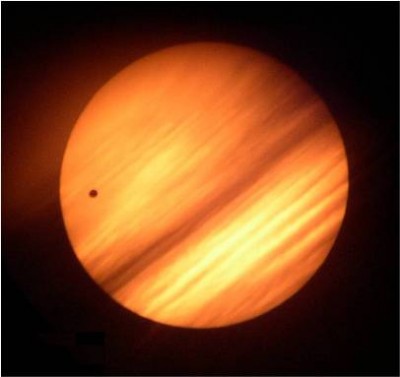
The Transit of Venus


Venus transiting the Sun – in pictures | Science | guardian.co.uk

18 February 2012

Teaching science through language

For me it was interesting to read this post at the end of a week when I'd twice said to different people that I do have a science bachground since Linguistics is a science. It's interesting to see this perspective beefed up big-time:
Language provides a wealth of data available from the students themselves — data with questions that beg to be asked, making everyday phenomena surprisingly unfamiliar and requiring explanation. Linguistics is at the core of cognitive science, offering incomparable ways to understand the nature of the human mind. The biological capacity for language appears to be shaped in part by genetic information and in part by information gained through childhood experience. Scientists have sought to tease that information apart, and this work has yielded good explanations in some domains and a body of understanding that can be made accessible to middle school and high school students
Interestingly I also use language to help teach cultural analysis for similar reasons: its proximity to all of us and the way that it scales to culture more widely.
Language Log � Teaching science through language

14 January 2012

On the quiescence of travelling toddlers

My grandchild often gets me thinking. Today, for instance, she woke up early, full of beans and a constant source of activity and attention. And we decided to take her into town. We decided to walk in and that she would therefore be in her pushchair (it did seem to us that asking her to walk 2 miles was a bit much for a 3 year-old). But then the everyday 'miracle' occurs, as it does so often and with so many toddlers: she was quiet and simply sat there for the walk down, for the walk around town in various shops and the walk back. Ne'ery an attempt towards active play. It was like she'd reached an altered state of consciousness.

And, on reflection, that's what I suspect it was: a quasi-trance state. Then my further question occurs: how come? Why is it that toddlers and babies tend to go quiet when travelling in these sorts of ways? Well, to me an evolutionary psychological hypothesis seems plausible. The children (and their parents, probably) who survived predation on the savannah would be the ones who stayed quiet when travelling. Then that begs the question: how would kids who cannot yet consistently form the kind of complex concepts we often express as 'if ... then ...' based on an abstract conditional ('if I make a noise /remain quiet') and a hard-to-conceptualise consequent ('we will/not attract the attentions of leopards') know to stay quiet and still? This is a question about what would cue them, presumably at something like an instinctual level. I would hypothesise that the rhythm (of walking or similar) and sight of of moving scenery cues/primes a transformation of consciousness to one that doesn't' need entertaining and is able to damp down the felt need for food or 'grooming'/interaction.

If this were so, then a further question-complex arises: does this instinct survive childhood, and if so, how does it show itself? This is even more speculative, of course, but I'm going to hazard a -hopefully- educated guess.

When I go for a walk I tend to find that my state of mind is not quite the same as 'normal'. In fact I often find that going for a walk enables my mind to produce ideas and solutions to problems that I've not achieved with conscious and focused attention to them in an office or meeting. So is this the same or a derived state of mind to that I think that our toddler grandchild seems to go into when in her pushchair? And if it is is it a good state for more discursive and creative way of thinking? Does it help meditative practice? (Seems to).

06 January 2012

Composers As Gardeners

For me this was a deja vu article in the sense that I recognised in it themes from elsewhere, particularly theological, despite the fact that it's Brian Eno in an interview piece on Edge. First a quote that probably sets the scene best.
Composers As Gardeners | Conversation | Edge:
for me, this was really a new paradigm of composing. Changing the idea of the composer from somebody who stood at the top of a process and dictated precisely how it was carried out, to somebody who stood at the bottom of a process who carefully planted some rather well-selected seeds, hopefully, and watched them turn into something.
As those readers alert to the paradigm shifts in science over the last 30 years or so will realise, this has something to do with chaos, complexity and emergence. But let's put it together with John Polkinhorne's line about God making things make themselves and the metaphor that Eno uses is ripe to be crossed-over into theological thinking about creation. Two things theological then occur to me: one is to recommend engagement with Fretheim's work on God, creation reflecting on passages and themes from the Hebrew Bible. Fretheim does an inspiring job of reading passages on creation and showing how they really do support ways of thinking about creation which includes the chaotic, the unpredictable and the self-assembling and so relativistic and chaordic insights.

The other thing that it links with is one of the themes in Vanstone's Love's Endeavour, Love's Expense where a major metaphor for God that Vanstone develops is of God as artist working with materials that have a certain recalcitrance and how the artistry lies in how the dialogue between artist and materials is worked through. This would certainly play well with the complexity science insights.

Another thing I bring to this is a conversation a few months back with an older artist who clearly didn't resonate with Vanstone's reading of the artistic task; defining good artists as being in total control of their materials and distinguished by the greatness of their vision.

Of course an artist must be capable of crafting their vision, but I still think that Vanstone has a fundamentally right insight. In actual fact, no artist can entirely reckon without some recalcitrance in materials and I think that there is a greatness in a redemptive approach which explores with the materials rather than over or simply through the materials. Therefore their vision, however implicitly and perhaps unreflectingly, is already in dialogue with the materials, the media (as Andy Crouch notes, even architects have to 'compromise' because builders rarely manage to realise the artistic vision).

And, it seems to me, Eno's reflection on what he has been trying to achieve with his generative music, tips the balance away from the modernistic 'mastery' vision of art (and theologies of creation -dare one mention Calvin here?) to the emergent, chaordic art where distinctions between artist and audience or 'public' are eroded and the event/ed-ness of art is played with and the sensuousness of materiality is often foregrounded. Eno's picking up of the gardner metaphor does a really nice job of capturing this.

Part of what is going on is also a reappraisal of what form of art gets to be thought of as paradigmatic of art. I'd like to put in a plea for drama too ... or live music: in both of these forms the trialogue between audience and performers and between author/composer and performers and directors is crucial. And who is the 'artist' in a play? The playwright? The actors? The director? There's a real issue of synergy and community in this. And this, I and others, would argue, is the important thing to capture when thinking theologically about creation and creating. Meticulous sovereignty/providence is out; it is untrue to what we experience and what we genuinely know about the way things are through scientific enterprise.

Creation and creating are actually communal, social and synergistic. We need to get away from the myth of the solitary artist and their brave vision and recognise, even celebrate, the embeddedness of art production and appreciation in human, indeed, creational community.


30 November 2011

The Santiago Theory of Cognition - Fritjof Capra

When I read Varela and Maturana, I confess I didn't pick up one of the following implications. I got and affirm the idea of understanding cognition whole-organismally. I think that the Christian-Hebraic understanding of humans in a holistic way is not going to be upset by that but rather affirmed. What I missed was the thing about language:
In this new view, cognition involves the entire process of life - including perception, emotion, and behaviour - and does not necessarily require a brain and a nervous system. At the human level, however, cognition includes language, conceptual thought, and all the other attributes of human consciousness. The Santiago theory of cognition, in my view, is the first scientific theory that really overcomes the Cartesian division of mind and matter, and will thus have the most far-reaching implications. Mind and matter no longer appear to belong to two separate categories but are seen as representing two complementary aspects of the phenomenon of life - the process aspect and the structure aspect.
I think that seeing language in conjunction with conceptual thought etc as characteristics of human cognition is particularly interesting in the light of the way that my thinking on the basis of Adam's naming the animals passage in Genesis 2. Understanding the latter in terms of the former (to put it crudely, but I'll refine that at another point); it would put the naming of the animals as part of the creation of humanity by cuing humanity's cognitive dimension which flows into and out of the creation of humanity's social nature in the same passage (so I would also want to add that human cognition is social and not simply about a body with its emotion and behaviour.

Just Love -a book review

 ... Seemed like a book 'just up my street': I've found myself pondering a lot lately about the links between justice and love, ...